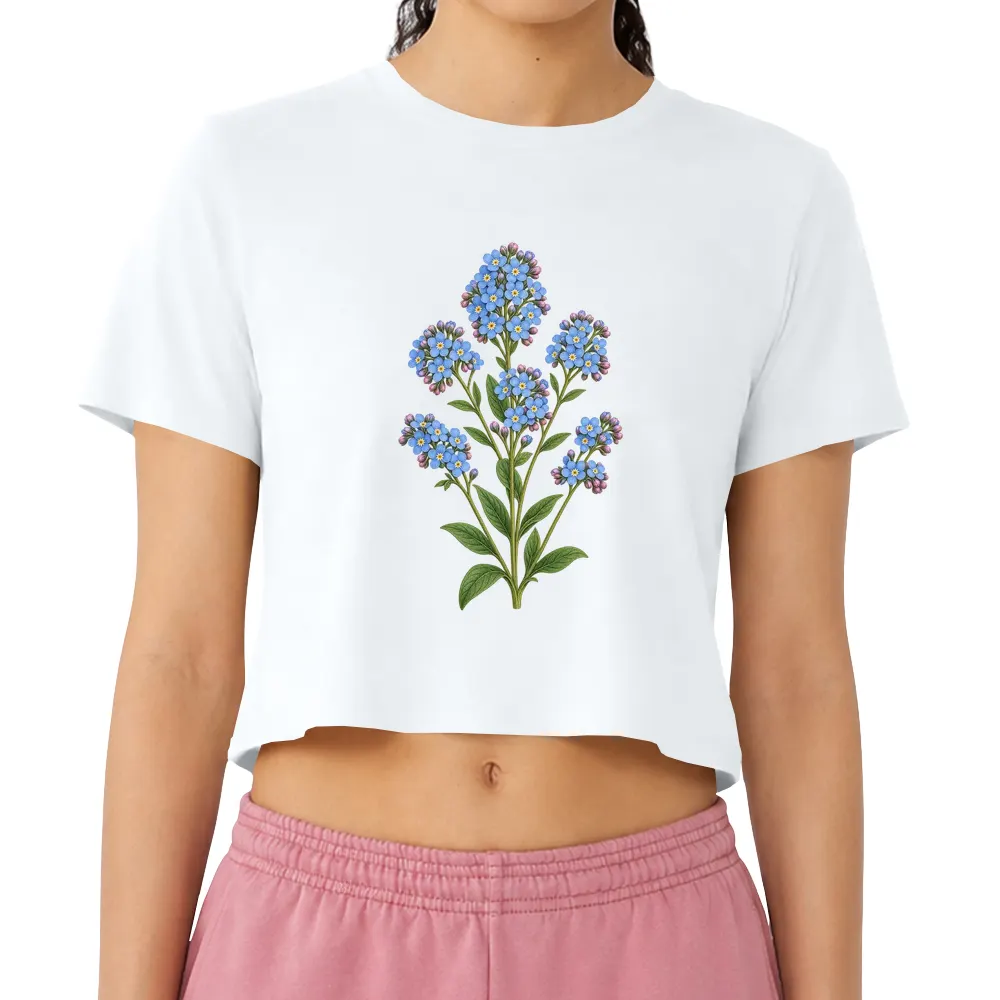
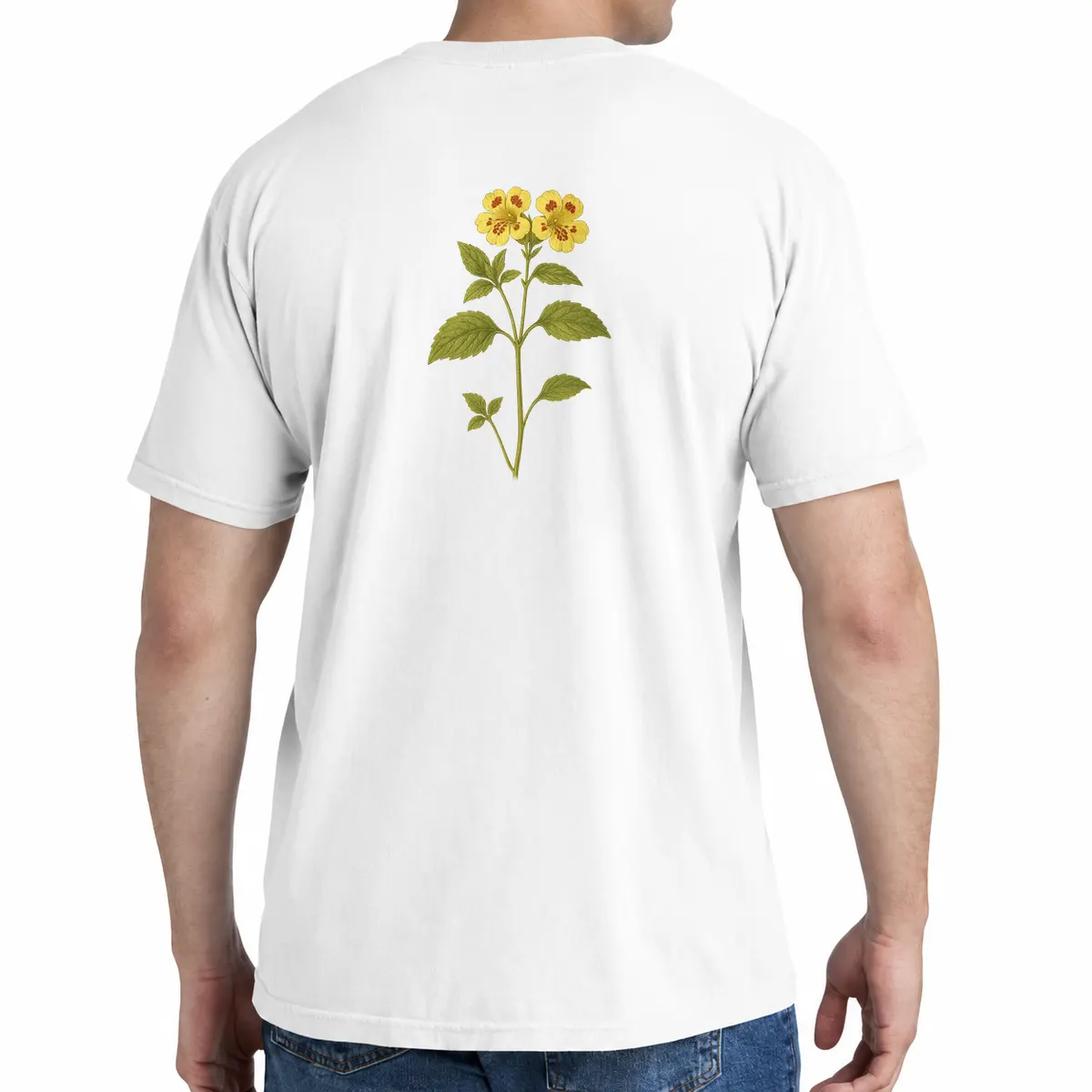
Lily Of The Nile
$40.00 USD
Created in the tradition of 19th-century botanical plates, then reviewed by hand before it goes anywhere near a shirt. Yours is printed fresh when you order it.
Style: Short Sleeve
Description
This women's tee is made from 6.1 oz 100% ring-spun US cotton in a boxy, slightly cropped mid-length cut. It features a topstitched ribbed collar, shoulder-to-shoulder twill tape, a seamless body, and a double-needle bottom hem. Dyed with OEKO-TEX certified low-impact dyes in a WRAP-certified facility, using a salt-free clean pigment process that uses about half the water of conventional pigment dyeing. Boxy fit, sizes S–2XL — it runs close to the body, so size up for a looser drape. Slight shade variation between garments is normal.
Size Chart
Garment measurements in inches, laid flat.
| Size | Body length | Body width |
|---|---|---|
| S | 20" | 18 1/4" |
| M | 21" | 20 1/4" |
| L | 22" | 22" |
| XL | 23" | 24" |
| 2XL | 24" | 26" |
The blank
Shipping
Returns
Meet lily of the Nile
Agapanthus africanus (L.) Hoffmanns.
Many evergreen agapanthus labelled Agapanthus africanus are actually cultivars or hybrids of A. praecox. The true A. africanus has unusually thick, fleshy flower parts: SANBI describes these as a useful distinction from its commonly cultivated relative. Both species carry flowers in rounded clusters above strap-shaped foliage. SANBI PlantZAfrica: Agapanthus praecox
Bloom window
Western Cape, South Africa
In its Cape habitat, flowering is concentrated from December to February, during Southern Hemisphere summer. Fire can stimulate particularly abundant flowering. SANBI PlantZAfrica: Agapanthus africanus
Native range
Kew places the species in the southwestern Cape. SANBI describes its range from the Cape Peninsula east to Swellendam, in the Western Cape winter-rainfall region. Plants grow in acidic, sandy soils, often among rocks or in depressions on sandstone sheets, from sea level to about one thousand metres. Kew POWO: Agapanthus africanusSANBI PlantZAfrica: Agapanthus africanus
Ecological relationships
SANBI records bees and sunbirds among the plant’s pollinators. SANBI PlantZAfrica: Agapanthus africanus
Explore this plant's botanical story