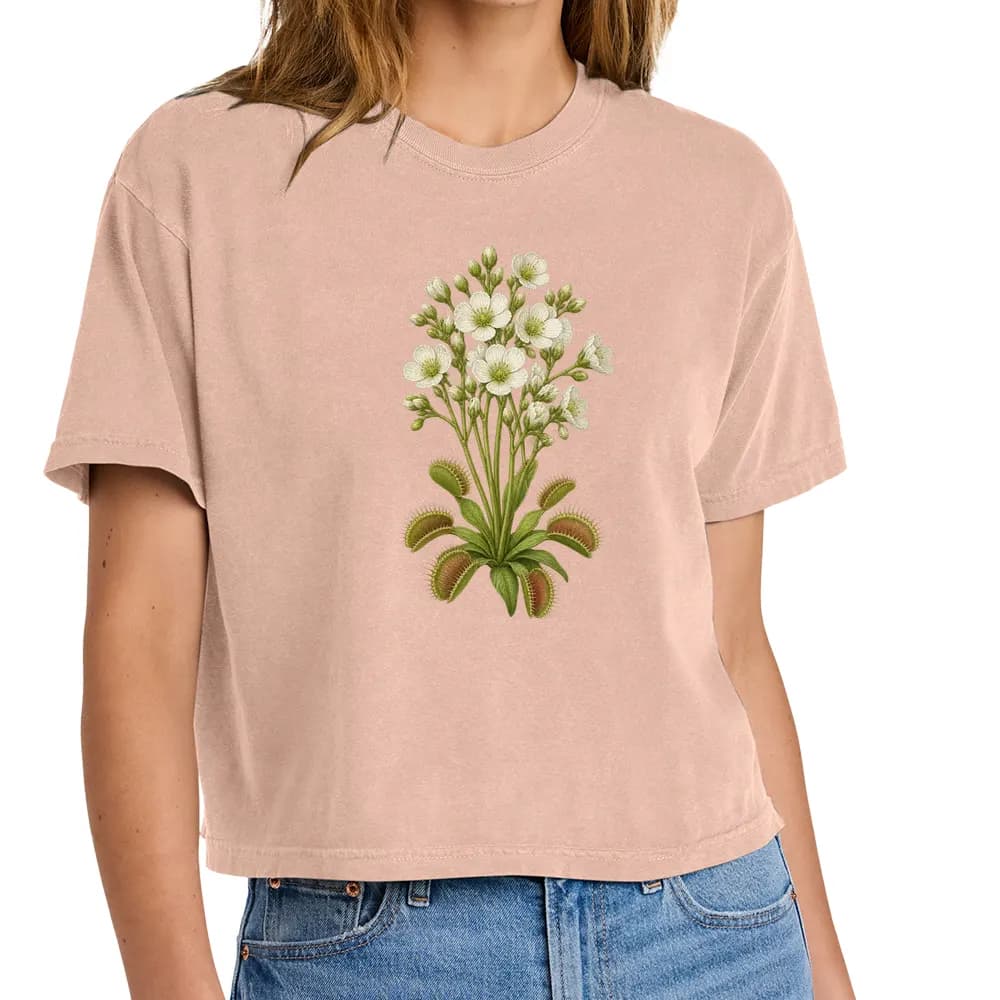
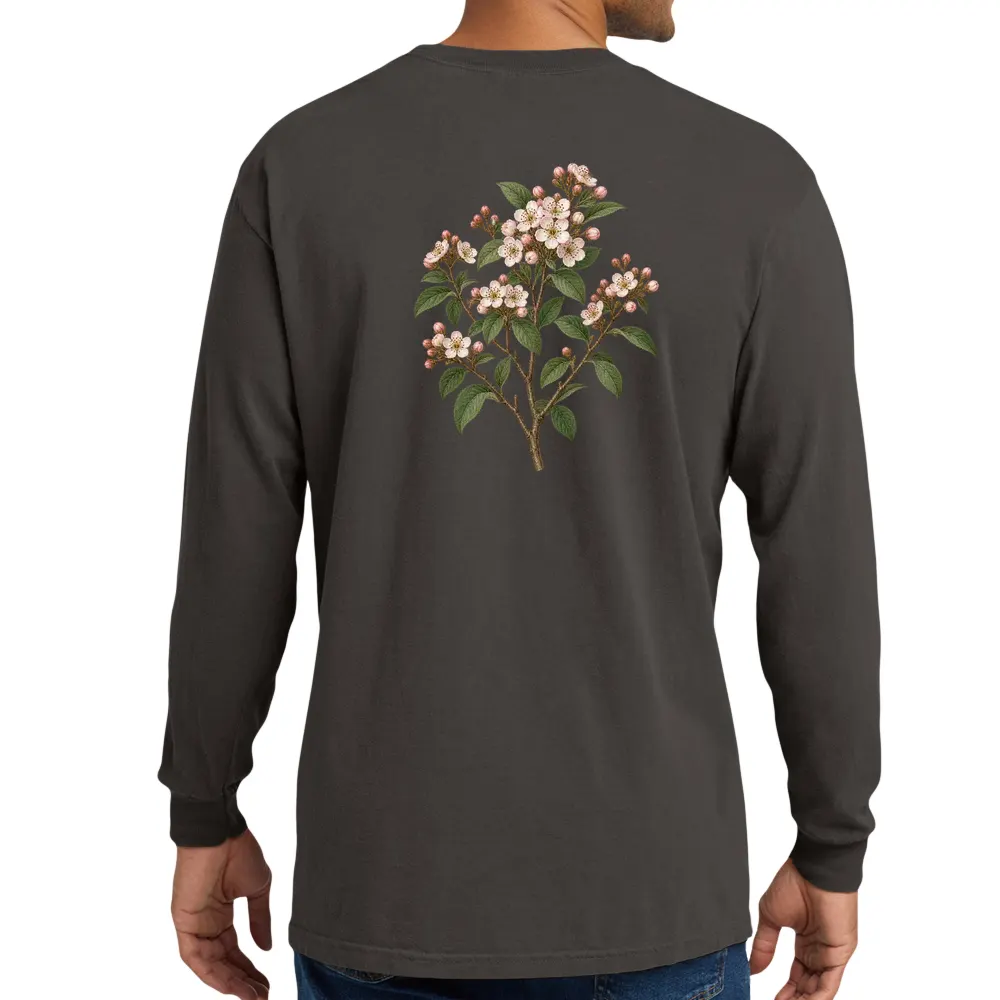
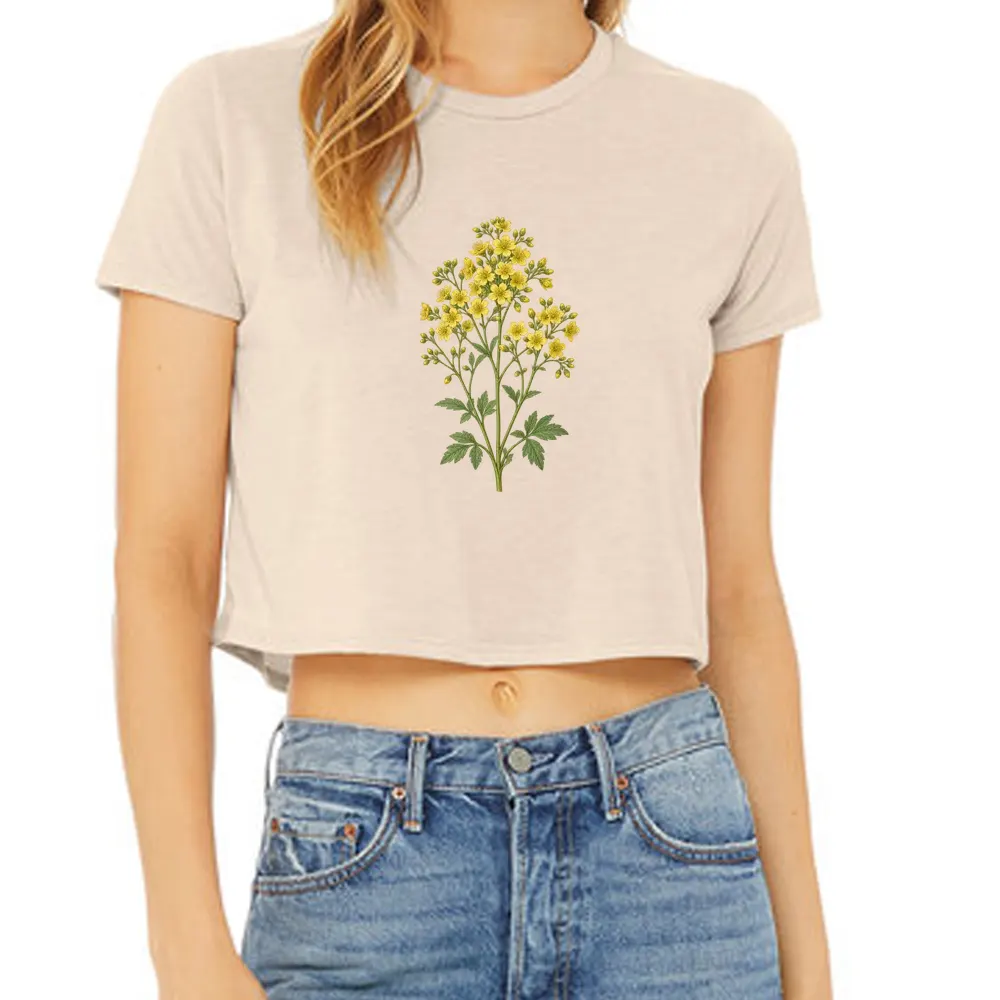
Sage
$40.00 USD
Created in the tradition of 19th-century botanical plates, then reviewed by hand before it goes anywhere near a shirt. Yours is printed fresh when you order it.
Style: Short Sleeve
Description
This women's tee is made from 6.1 oz 100% ring-spun US cotton in a boxy, slightly cropped mid-length cut. It features a topstitched ribbed collar, shoulder-to-shoulder twill tape, a seamless body, and a double-needle bottom hem. Dyed with OEKO-TEX certified low-impact dyes in a WRAP-certified facility, using a salt-free clean pigment process that uses about half the water of conventional pigment dyeing. Boxy fit, sizes S–2XL — it runs close to the body, so size up for a looser drape. Slight shade variation between garments is normal.
Size Chart
Garment measurements in inches, laid flat.
| Size | Body length | Body width |
|---|---|---|
| S | 20" | 18 1/4" |
| M | 21" | 20 1/4" |
| L | 22" | 22" |
| XL | 23" | 24" |
| 2XL | 24" | 26" |
The blank
Shipping
Returns
Meet sage
Salvia × bernardina Parish ex Greene
This California sage records a meeting between two distinct plants: Salvia columbariae and Salvia mellifera. A modern study of California sages discusses viable crosses found both in the wild and in garden experiments. The resulting hybrid is known as Salvia × bernardina and typically shows an intermediate combination of its parents’ features. Walker and colleagues, 2015: Relationships within California Salvia
Native range
The name was published from material gathered near San Bernardino, California, by S. B. Parish in 1885. Current taxonomic records place its native occurrence in California. The modern molecular study discusses the named hybrid as part of the naturally hybridising California sage flora. Greene, 1885: Salvia Bernardina original descriptionWorld Flora Online: Salvia × bernardinaWalker and colleagues, 2015: Relationships within California Salvia
Explore this plant's botanical story