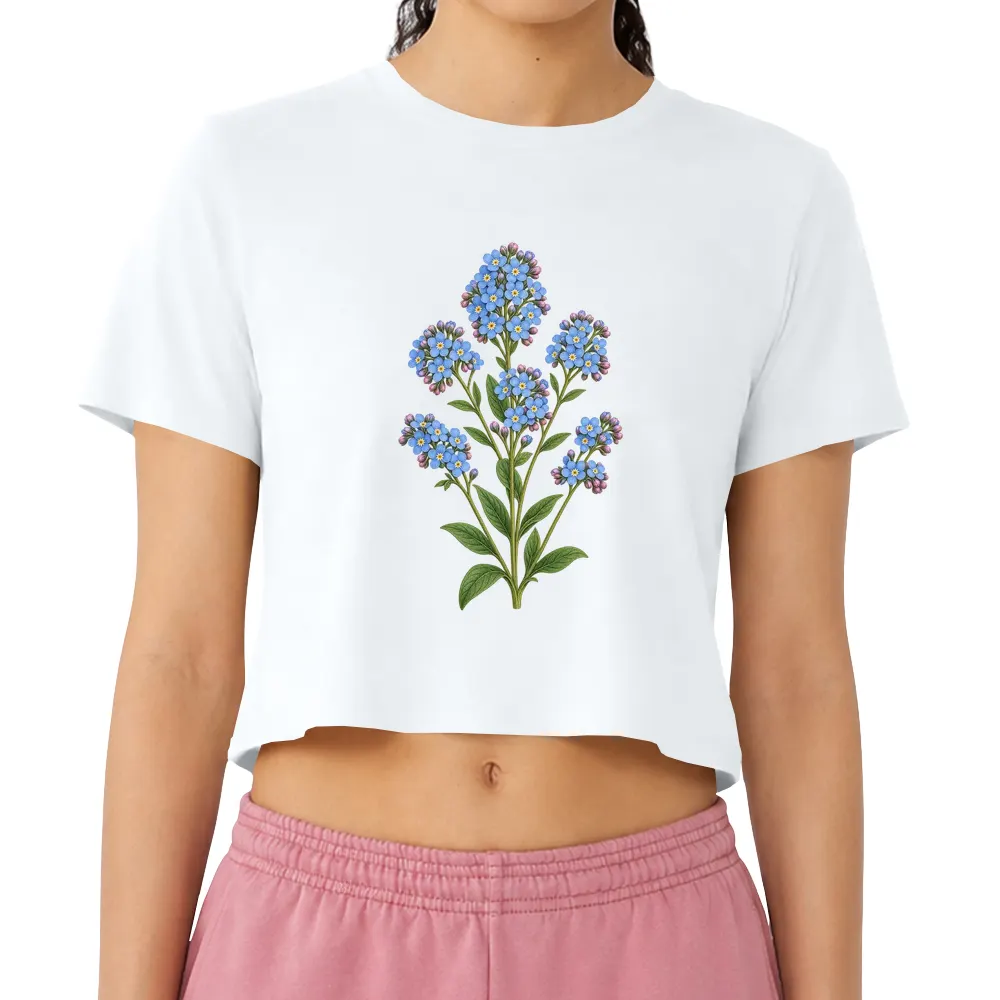
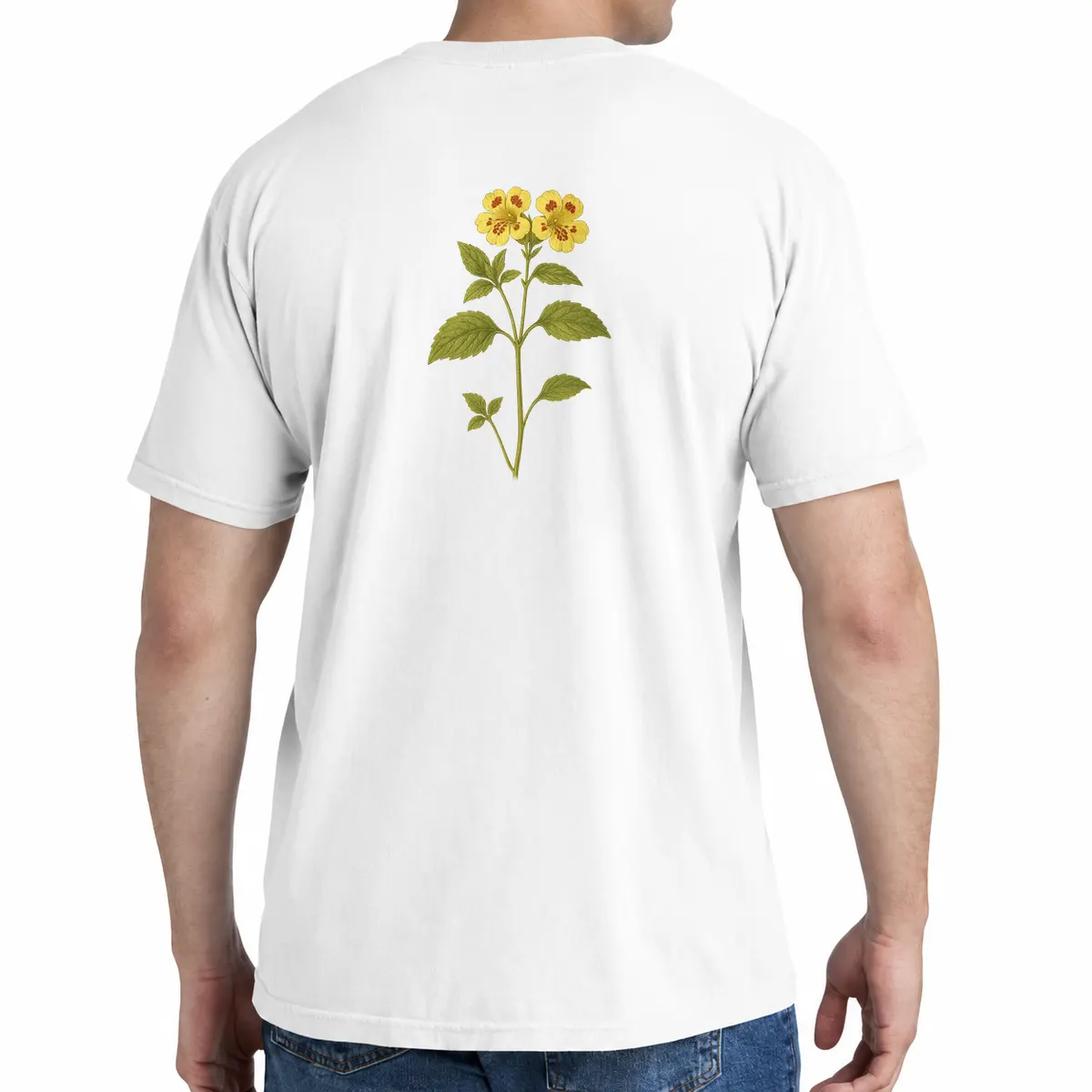
White Wild Indigo
$40.00 USD
Created in the tradition of 19th-century botanical plates, then reviewed by hand before it goes anywhere near a shirt. Yours is printed fresh when you order it.
Style: Short Sleeve
Description
This women's tee is made from 6.1 oz 100% ring-spun US cotton in a boxy, slightly cropped mid-length cut. It features a topstitched ribbed collar, shoulder-to-shoulder twill tape, a seamless body, and a double-needle bottom hem. Dyed with OEKO-TEX certified low-impact dyes in a WRAP-certified facility, using a salt-free clean pigment process that uses about half the water of conventional pigment dyeing. Boxy fit, sizes S–2XL — it runs close to the body, so size up for a looser drape. Slight shade variation between garments is normal.
Size Chart
Garment measurements in inches, laid flat.
| Size | Body length | Body width |
|---|---|---|
| S | 20" | 18 1/4" |
| M | 21" | 20 1/4" |
| L | 22" | 22" |
| XL | 23" | 24" |
| 2XL | 24" | 26" |
The blank
Shipping
Returns
Meet white wild indigo
Baptisia alba (L.) R.Br.
White wild indigo combines a branching, leafy body with upright spires of pale flowers. Deep roots support a long-lived clump, while new herbaceous stems renew its above-ground framework. Young plants may take several years to begin flowering. Once established, the three-part foliage supplies a substantial backdrop to the tall, narrow flower clusters. NC State Extension: Baptisia alba
Bloom window
North Carolina horticultural account
NC State’s horticultural account records the white to cream flower clusters in May and June. NC State Extension: Baptisia alba
Native range
In the southeastern United States, this perennial is associated with a range of open woodland and field settings. An Alabama study published in 2014 describes the plant it calls Baptisia alba in dry woods, open fields, floodplains and roadsides. Woods and Diamond 2014: The genus Baptisia in Alabama
Explore this plant's botanical story