white wild indigo
Baptisia alba (L.) R.Br.
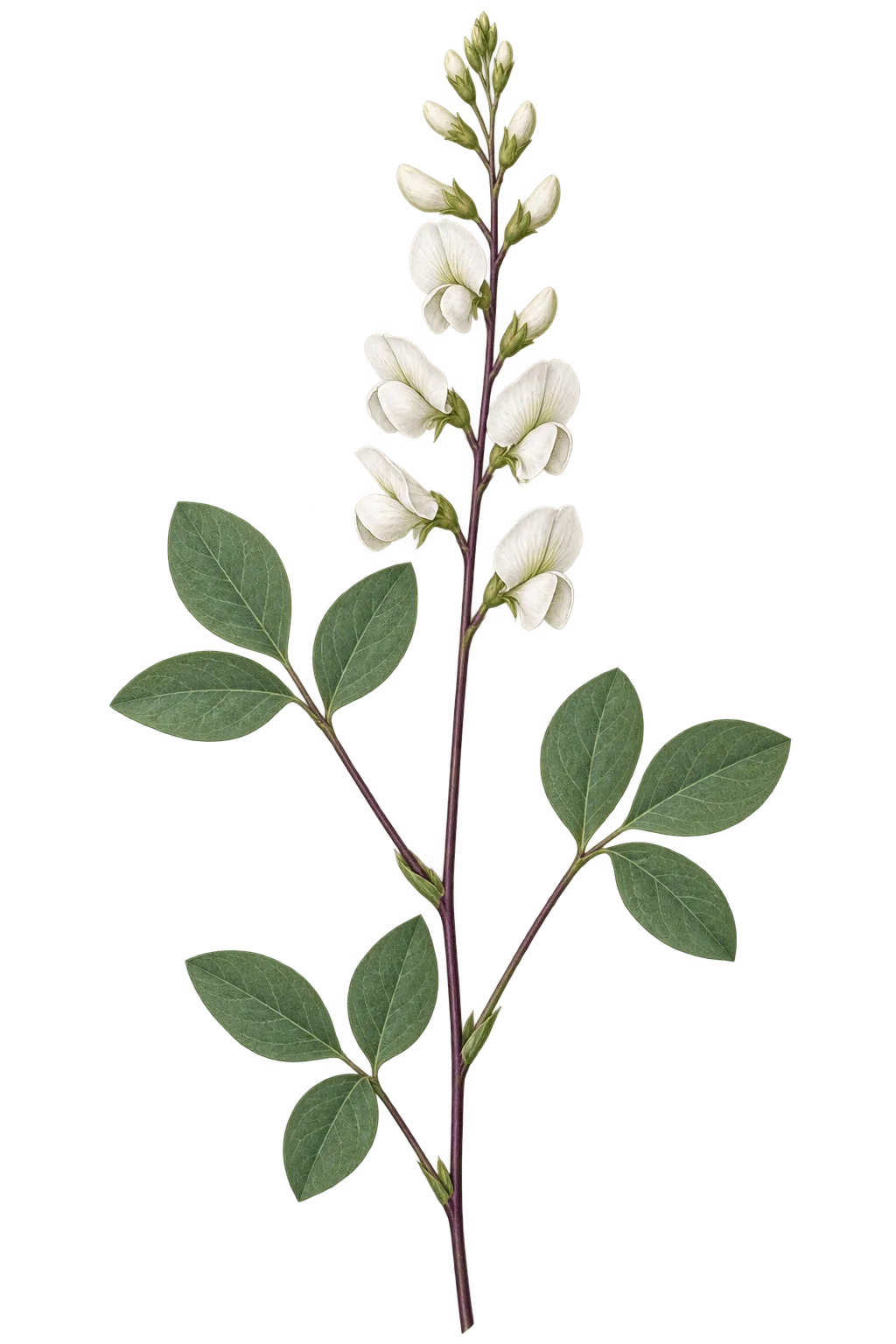
White wild indigo combines a branching, leafy body with upright spires of pale flowers. Deep roots support a long-lived clump, while new herbaceous stems renew its above-ground framework. Young plants may take several years to begin flowering. Once established, the three-part foliage supplies a substantial backdrop to the tall, narrow flower clusters. NC State Extension: Baptisia alba
Botanical name
ITIS accepts Baptisia alba (L.) Vent.; Kew uses (L.) R.Br. Both cite Crotalaria alba L. and include B. albescens, establishing the supplied identity despite author attribution differences. ITIS: Baptisia alba (L.) Vent., TSN 26467Kew POWO: Baptisia alba (L.) R.Br.
Recognizing the plant
Its leaves are divided into three smooth leaflets, and its round stems can have a bluish or purplish cast. The white to cream pea-shaped blossoms gather in elongated racemes, followed by substantial pods. The foliage remains conspicuous after flowering, giving the plant a leafy presence through the rest of the growing season. Woods and Diamond 2014: The genus Baptisia in AlabamaNC State Extension: Baptisia alba
Bloom window
North Carolina horticultural account
NC State’s horticultural account records the white to cream flower clusters in May and June. NC State Extension: Baptisia alba
Native range
In the southeastern United States, this perennial is associated with a range of open woodland and field settings. An Alabama study published in 2014 describes the plant it calls Baptisia alba in dry woods, open fields, floodplains and roadsides. Woods and Diamond 2014: The genus Baptisia in Alabama
Botanical sources
- Woods and Diamond 2014: The genus Baptisia in Alabama
- NC State Extension: Baptisia alba
- Kew POWO: Baptisia alba (L.) R.Br.
- ITIS: Baptisia alba (L.) Vent., TSN 26467
Reviewed 2026-10-11. Seasonal development varies with location and growing conditions.