air yam
Dioscorea bulbifera L.
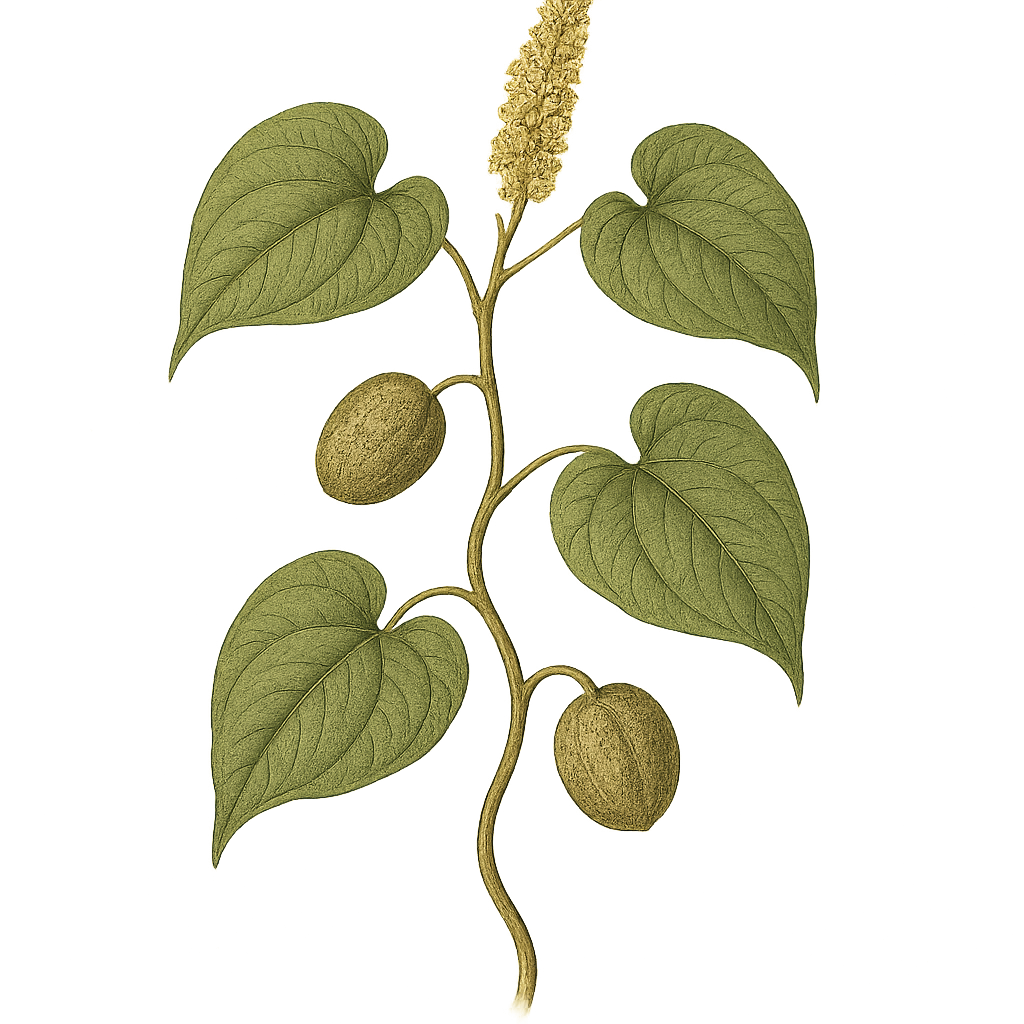
Air yam carries one of its most conspicuous structures above ground: rounded bulbils tucked where leaves meet the stem. These vegetative propagules can produce new vines after falling, helping explain how the plant spreads without relying entirely on seeds. Beneath the foliage, the perennial vine may also form underground storage organs. University of Florida: Dioscorea bulbiferaUF/IFAS: Invasive Plants in Natural Areas, Air Potato
Botanical name
Kew accepts Dioscorea bulbifera in Dioscoreaceae. Air yam and air potato refer here to this exact species. Plants of the World Online: Dioscorea bulbifera
Recognizing the plant
The smooth, broad leaves have heart-shaped bases and pointed tips, with several strong veins radiating across the blade. Leaves alternate along a twining stem that can climb into tree canopies. Brown or tan bulbils become conspicuous among them. Male and female flowers occur on separate individuals; University of Florida researchers note that female plants predominate in Florida and sexual reproduction is rarely observed there. University of Florida: Dioscorea bulbifera
Seasonal development
Florida, United States
In Florida, plants become dormant during the short days of winter; surviving bulbils can generate new growth. UF/IFAS: Invasive Plants in Natural Areas, Air Potato
Native range
Kew describes a native range across tropical and subtropical parts of the Old World to Australia. Florida populations are introduced. There, air yam occupies disturbed woodland, floodplains, thickets and urban landscapes, and can also enter undisturbed habitats. Plants of the World Online: Dioscorea bulbiferaUniversity of Florida: Dioscorea bulbifera
Botanical sources
- Plants of the World Online: Dioscorea bulbifera
- University of Florida: Dioscorea bulbifera
- UF/IFAS: Invasive Plants in Natural Areas, Air Potato
Reviewed 2026-10-11. Seasonal development varies with location and growing conditions.