avocado
Persea americana Mill.
Avocado has been cultivated in tropical America since before European contact. Its familiar fruit is botanically a berry surrounding one large seed. The fruit generally remains firm on the tree and ripens after it falls or is picked, separating growth on the branch from the final softening of the flesh. University of Florida IFAS: Avocado growing in Florida
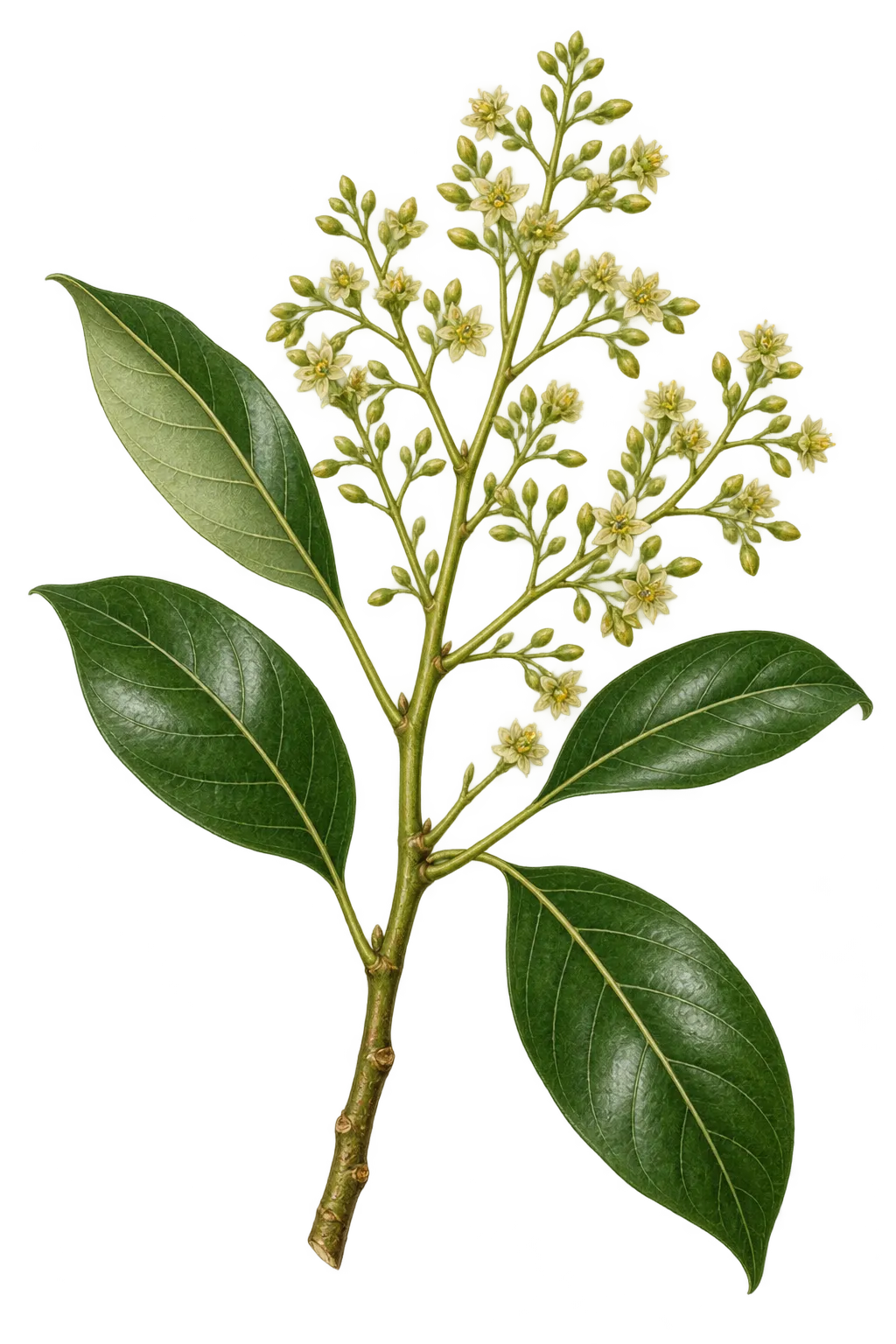
Botanical name
Persea americana is an accepted tree species in Lauraceae. Cultivated forms vary widely within the species. Kew: Persea americana
Recognizing the plant
Trees commonly reach about 9–20 m and develop crowns ranging from low and dense to upright and irregular. Young leaves may be reddish and hairy, then mature to smooth, leathery dark green. Small yellow-green flowers occur in many-flowered clusters near the ends of shoots. Each flower contains both reproductive sexes, but the female and male phases function at different times. Fruit shape, skin texture and ripe color differ among cultivated forms. University of Florida IFAS: Avocado growing in Florida
Native range
The native range extends from central Mexico through Central America to Costa Rica. Its worldwide cultivated distribution includes tropical and subtropical regions far beyond that original range. Kew: Persea americanaUniversity of Florida IFAS: Avocado growing in Florida
Ecological relationships
Under Florida conditions, bees and wasps help cross-pollinate flowers when compatible flowering phases overlap. University of Florida IFAS: Avocado growing in Florida
Botanical sources
Reviewed 2026-10-11. Seasonal development varies with location and growing conditions.