Butterfly milkweed
Asclepias tuberosa L.
Butterfly milkweed brings clusters of orange flowers above narrow leaves. Its role in a planting extends beyond the flowers: visiting butterflies drink nectar, while some moth and butterfly caterpillars use the foliage. NC State Extension
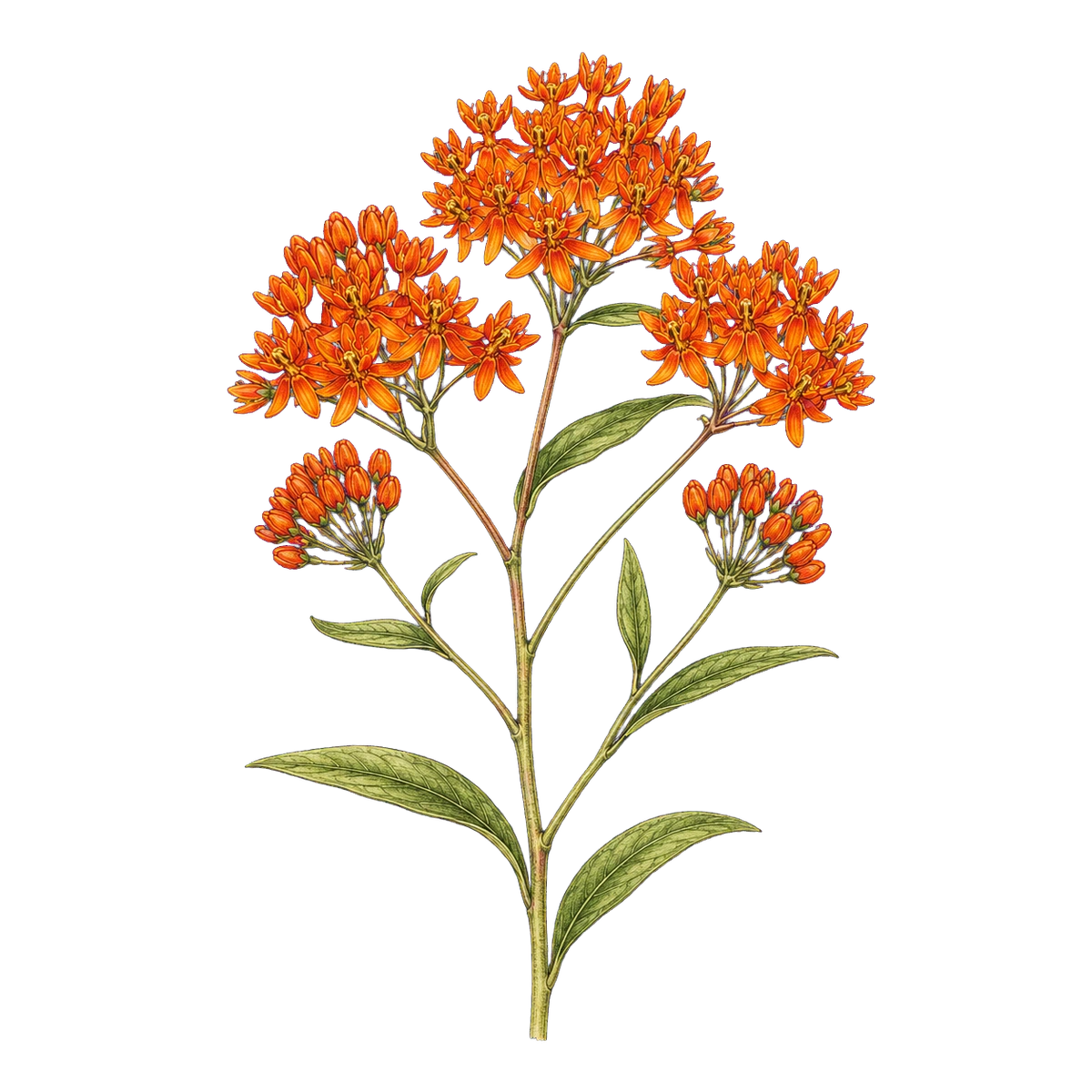
Recognizing the plant
Look for upright, often hairy stems and narrow leaves beneath the flower clusters. Each small flower has the hood-and-horn structures characteristic of milkweeds. Unlike many relatives, this species has clear rather than milky sap. NC State Extension
When it blooms
North Carolina regional guidance (NC State Extension)
NC State lists a typical flowering period of May through August. Use this as a regional guide rather than a promise for every site or climate. NC State Extension
Native range
Native from southeastern Canada through much of the United States to northern Mexico; NC State also records it as native to North Carolina. Kew Plants of the World OnlineNC State Extension
Flowers and wildlife
Flowers offer nectar to butterflies and other insect pollinators. This adult feeding role is separate from the plant's role as caterpillar food. NC State Extension
The foliage is a larval host for monarch butterflies and milkweed tussock moths. A caterpillar-host relationship does not mean that the adult insect necessarily pollinates the flowers. NC State Extension
A growing note
Choose the planting position carefully: an established deep taproot makes butterfly milkweed difficult to transplant. NC State Extension
Botanical sources
Reviewed 2026-10-11. Flowering dates vary with location and growing conditions.