caryopteris
Caryopteris × clandonensis A.Simmonds
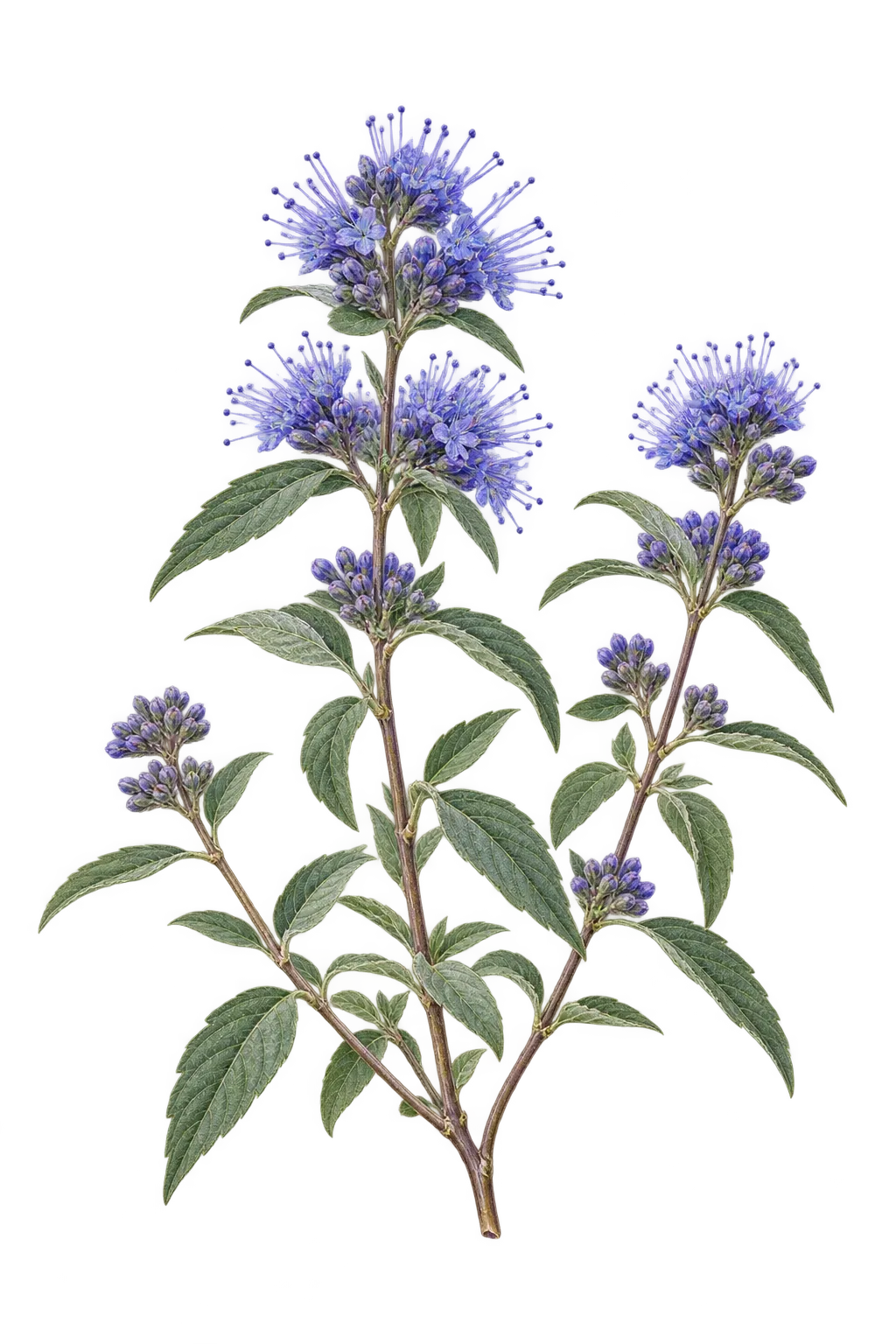
Bluebeard’s name points to the elongated, fringed lower part of each blue flower. Its botanical history leads to Arthur Simmonds’s garden at Clandon in Surrey, England, where hybrid seedlings appeared around 1930. The place survives in the name clandonensis. This garden origin helped establish a low, flowering shrub now represented by numerous horticultural selections. NC State Extension: Caryopteris × clandonensisChicago Botanic Garden: Arthur Simmonds Bluebeard
Botanical name
Supplied hort. ex Rehder refers to same C. incana × C. mongholica garden hybrid; Kew taxon uses A.Simmonds and its descriptive generic source uses A.Simmonds ex Rehder. Verified name: Caryopteris × clandonensis A.Simmonds. Kew POWO: Caryopteris × clandonensisKew POWO: Caryopteris generic treatment
Recognizing the plant
Opposite, simple leaves are dull blue-green above and silvery beneath, generally one to two inches long. Their margins may be smooth or toothed, and the foliage releases fragrance when crushed. Gray-green stems are four-sided and hairy. Flower clusters arise from the axils of upper leaves. The deciduous shrub commonly forms a mound about two to three feet high and equally wide. NC State Extension: Caryopteris × clandonensis
Bloom window
North Carolina, United States
In North Carolina, flowering occurs in late summer and early autumn on new growth. Stems may die back to ground level in colder climates. NC State Extension: Caryopteris × clandonensis
Native range
Caryopteris ×clandonensis is an artificial hybrid of Caryopteris incana and Caryopteris mongholica. It has a documented English garden origin rather than a separate wild native range. Kew POWO: Caryopteris × clandonensisChicago Botanic Garden: Arthur Simmonds Bluebeard
Ecological relationships
Bees and butterflies visit the nectar-rich blossoms, according to North Carolina Extension. NC State Extension: Caryopteris × clandonensis
Botanical sources
- NC State Extension: Caryopteris × clandonensis
- Kew POWO: Caryopteris × clandonensis
- Chicago Botanic Garden: Arthur Simmonds Bluebeard
- Kew POWO: Caryopteris generic treatment
Reviewed 2026-10-11. Seasonal development varies with location and growing conditions.