Indian Valley sedge
Carex aboriginum M.E. Jones
Indian Valley sedge has a story of rediscovery as well as a distinctive flower head. Collected in Idaho in 1899, Carex aboriginum was not seen again until 1999, when material was found near the original locality. New collections allowed botanists to compare the living plant with its preserved specimens and study a sedge that had long been known chiefly from its original gathering. Flora of North America: Carex aboriginum
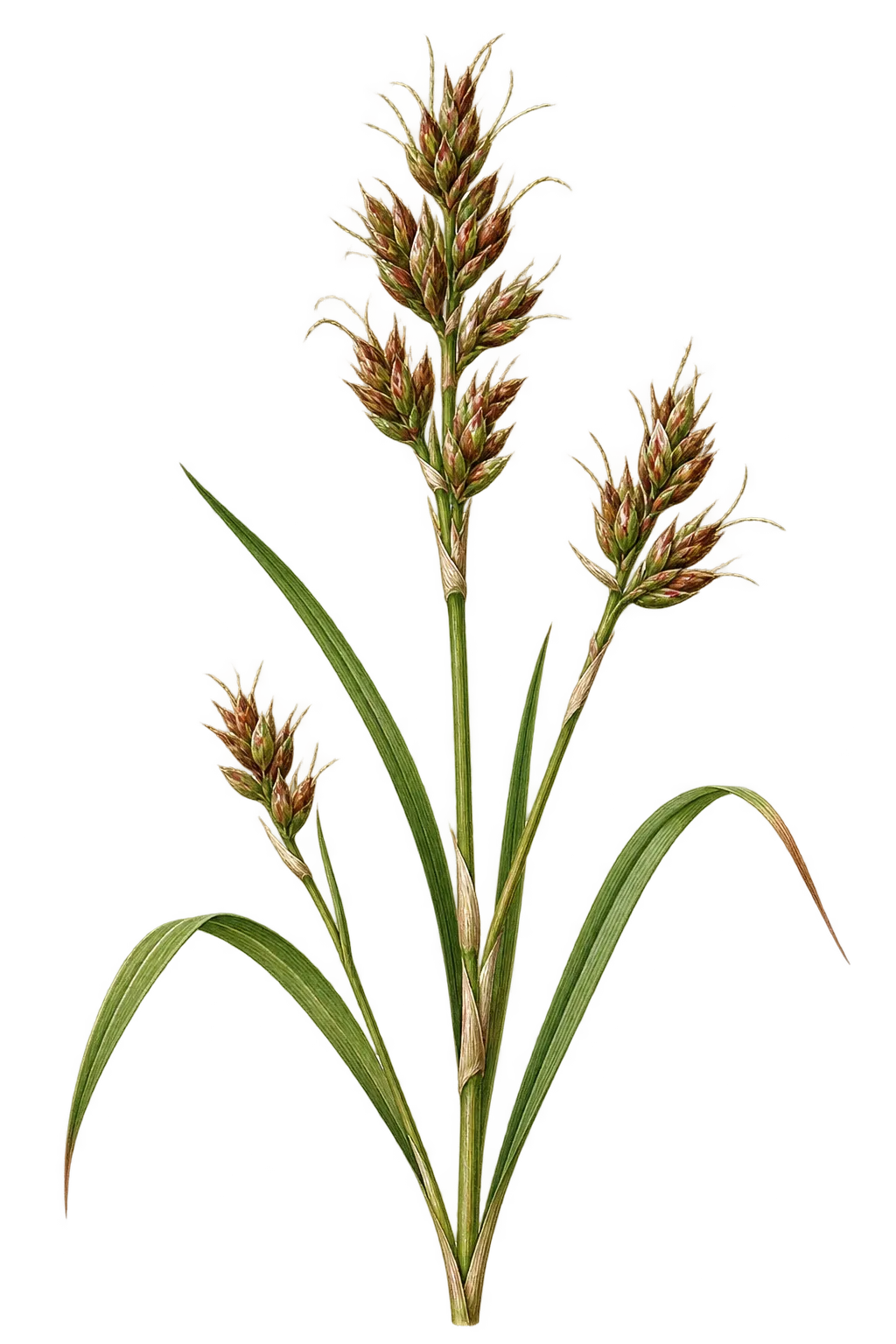
Botanical name
Carex aboriginum M.E. Jones is accepted in the cited taxonomic treatment. The supplied database name identifies the same species. Kew POWO: Carex aboriginum
Recognizing the plant
The plant forms tufts, with narrow leaves and flowering stems described as fifty-five to eighty centimetres tall. Separate upright spikes carry the flowers. Around the developing fruits are broad, veined sacs called perigynia, with finely toothed margins and short, two-toothed beaks. These small structures are important for recognising the species. Flora of North America: Carex aboriginum
Bloom window
west-central Idaho, United States
In west-central Idaho, flowering was observed from mid-May into early June, with fruits maturing during June; timing varied between years. Idaho Fish and Game: Field Surveys for Carex aboriginum (2003)
Native range
Native to Idaho, it occupies seasonally moist ground rather than permanently flooded marsh. State field surveys describe alluvial terraces, seeps and meadow patches near intermittent streams. Its habitat lies in a narrow transition between wetter ground and dry uplands, making both season and soil moisture central to understanding where it grows. Kew POWO: Carex aboriginumIdaho Fish and Game: Field Surveys for Carex aboriginum (2003)
Botanical sources
- Flora of North America: Carex aboriginum
- Kew POWO: Carex aboriginum
- Idaho Fish and Game: Field Surveys for Carex aboriginum (2003)
Reviewed 2026-10-11. Seasonal development varies with location and growing conditions.