scarlet beebalm
Monarda didyma L.
Scarlet beebalm forms expanding patches as underground stolons send up new shoots. Crushing a leaf releases its minty scent. The epithet didyma refers to paired flowers, although the pairing becomes difficult to see as more blossoms open within each crowded head. NC State Extension: Monarda didyma
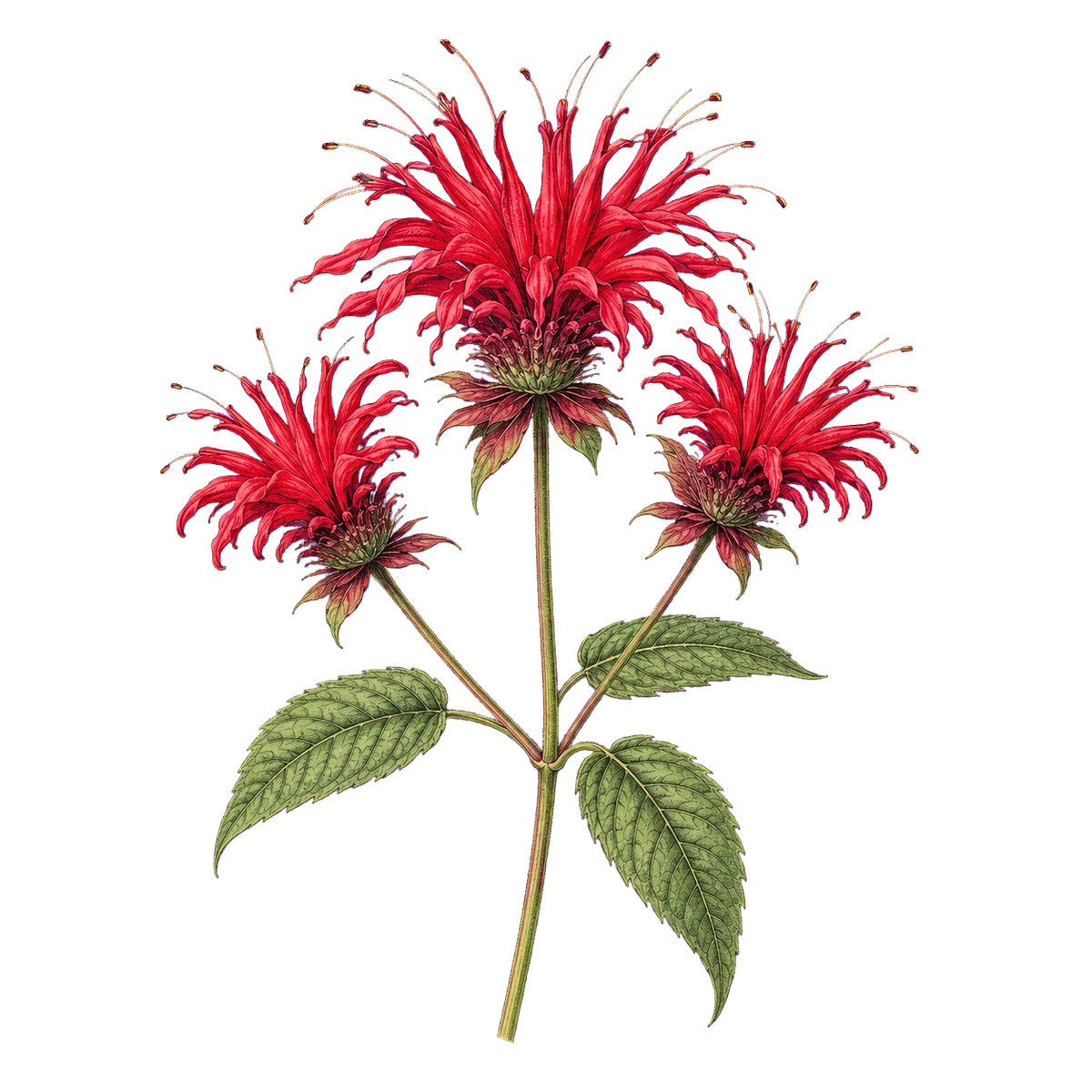
Botanical name
Monarda didyma is the scarlet-flowered perennial species of the mint family, Lamiaceae. NC State Extension: Monarda didyma
Recognizing the plant
Erect, square stems carry opposite, coarsely hairy leaves with finely toothed edges. Plants can reach about four feet tall. Dense flower heads are surrounded by leafy bracts, often tinged red. Individual blossoms have a long, narrow tube and two lips, with the upper lip longer than the lower one. NC State Extension: Monarda didyma
Bloom window
North Carolina
In North Carolina, flowers open from July through September. Vascular Plants of North Carolina: Scarlet beebalm
Native range
The native range extends from eastern Canada south through the Appalachians to northern Georgia. In North Carolina it grows mainly in the mountains, on wooded stream banks, forested seepages and damp boulderfield slopes. Vascular Plants of North Carolina: Scarlet beebalm
Ecological relationships
Visitors include bumblebees, swallowtail butterflies and ruby-throated hummingbirds. NC State Extension: Monarda didyma
Its foliage supports larvae of the hermit sphinx, orange mint moth and raspberry pyrausta. NC State Extension: Monarda didyma
Native bees nest in its dead, hollow stems. NC State Extension: Monarda didyma
Botanical sources
Reviewed 2026-10-11. Seasonal development varies with location and growing conditions.